קראו את המדריך בעברית · Read in Hebrew
Parks & outdoors · Manhattan · Free admission
By Zvi Zidon, a New Yorker since 2002 · October 11, 2026
The most useful thing about Central Park is not that it gives you another sight to tick off. It gives the day a different pace. A path curves, the traffic softens, and suddenly the best use of the next half-hour might be a bench.
For a first visit, resist trying to collect the whole park. Choose a small stretch, leave time to wander and make the walk connect naturally with the rest of your day. A museum followed by a quiet lakeside pause can feel far more generous than another rushed attraction.

Central Park at a glance
- Where
- Manhattan, between Fifth Avenue and Central Park West, from 59th to 110th Street.
- Opening hours
- 6 a.m.–1 a.m. daily, according to the Central Park Conservancy.
- Cost
- Entering the park is free. Attractions, rentals and tours have separate prices.
- Time to allow
- Our suggestion: 90 minutes for a focused introductory walk; half a day if you want stops, playtime or a museum nearby.
Official visitor information ↗ Google Maps
A first walk that leaves room to enjoy it
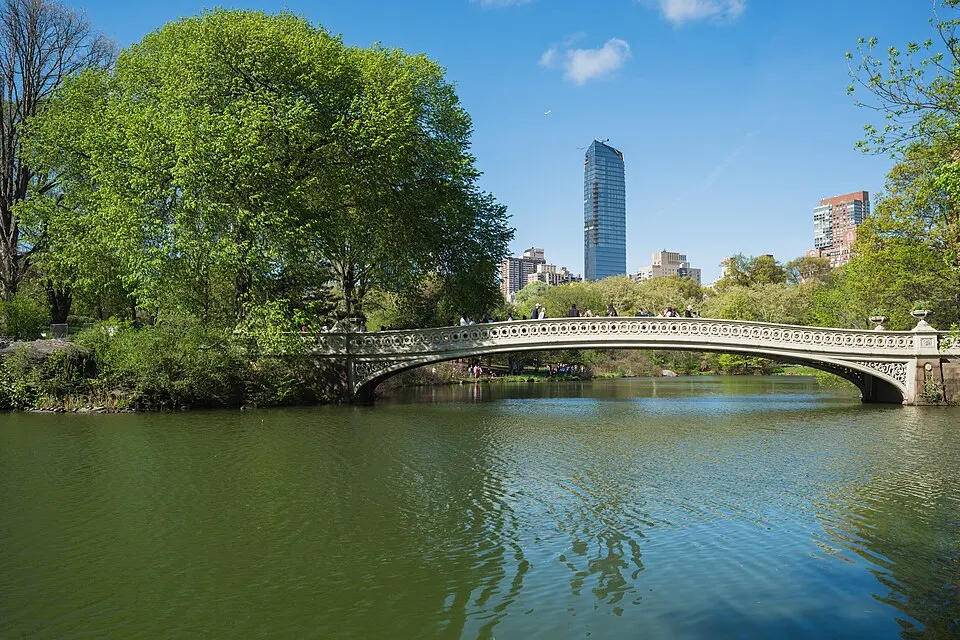
The 90-minute route: enter at Sixth Avenue and Central Park South, walk toward the Mall, pause at Bethesda Terrace and Bow Bridge, then leave at West 72nd Street. Allow longer if you linger or take a picnic. Zoo visits, boat rentals and museum visits are separate outings.
Start near the south end of the park and let the contrast do its work: the city is still right there, but you no longer have to move at its speed. Make your way toward the Mall, then Bethesda Terrace, and continue toward Bow Bridge. For the route above, finish at West 72nd Street; it gives the walk a clear end on the Upper West Side. Choose a different exit if it better suits your day, allowing for the changed walking time.
Allow about 90 minutes as an editorial estimate, with extra time for photographs and sitting down. This is a suggested walking sequence, not a timed navigation route. Use the Conservancy’s map to choose the paths and exits that suit you.
The Mall offers a more formal, tree-lined approach. Bethesda is the place to pause and look at how the architecture frames the space. Around Bow Bridge, stop thinking only about crossing: the bridge is also something to look at from the paths beside the water.
Three places to slow down with a camera
Bethesda Terrace: look for the relationship between arches, people and light. Waiting for a gap in the foot traffic often matters more than changing your camera settings.
Bow Bridge: a photograph from the bank tells a different story from one taken on the bridge itself. Include the curve and its setting rather than filling every frame with a face.
The Mall: use the path and trees to lead the eye. It can be worth taking one wide frame before moving in for a portrait. Seasonal color and the quality of light change the result; a photograph from another month is not a promise of what you will find.
With children, leave the checklist shorter
If animals are the main request, the Central Park Zoo guide helps you plan that smaller, ticketed visit separately from the free park walk.
A family visit works better when the walk is only part of the attraction. Choose a few landmarks, plan a real rest stop and give children a small job: find a reflection, spot a bridge or choose the best place for a family photograph.
Do not feed the wildlife. Watching squirrels is entertaining enough without turning a snack into part of their diet. Keep food for the picnic, and leave the park as you found it.
A park day with Jewish life in mind
Bringing your own kosher picnic is the simplest food plan. If you prefer a meal nearby, Eshel on Columbus Avenue is one option to investigate on the Upper West Side; its own guide explains the supervision, Friday hours and budget. A restaurant on one side of the park may be a substantial detour from your chosen exit.
A Shabbat walk requires more thought than “the park is free.” Work out your walking route, carrying requirements and current eruv information for your circumstances. Rentals, paid attractions and transport need separate consideration. This guide does not certify a route as suitable for Shabbat.
Pair it with one good neighbor
The Metropolitan Museum of Art and the American Museum of Natural History sit on different sides of the park. Pick the museum first, then use the park as the part of the day that lets you breathe. You do not need to cross Manhattan twice to make the outing feel complete.
On the west side, a meal and a shorter walk can be enough. On the east side, build in time to reach the museum entrance rather than assuming every point on the park boundary is equally convenient.
A different park mood: follow the Hudson
If you would rather sit beside the river than cover another famous park landmark, choose our Riverside Park walking guide for another afternoon. It offers a short garden-and-memorial route, a longer walk toward Morningside Heights, or a separate sunset stop at Pier I. Columbia campus access needs advance arrangements; the outdoor walks do not depend on getting inside.
Quick answers
Do I need a ticket?
No ticket is needed to enter Central Park. Book separately for any paid attraction or tour you choose.
Can I see it all in 90 minutes?
No. That time suits a selected section with a few stops, not the whole park.
Where are the restrooms and accessible paths?
Use the official visitor map and help center to plan around your entry point. Facility availability and the best route can differ across this large park.
Park hours rechecked October 12, 2026. Sources: Central Park Conservancy help center and its visitor map. Walking durations, photography ideas and the suggested sequence are CenterNYC editorial recommendations.