Midtown Manhattan · Broadway, bright lights & a free city walk
By Zvi Zidon, a New Yorker since 2002 · Practical sources checked October 11, 2026
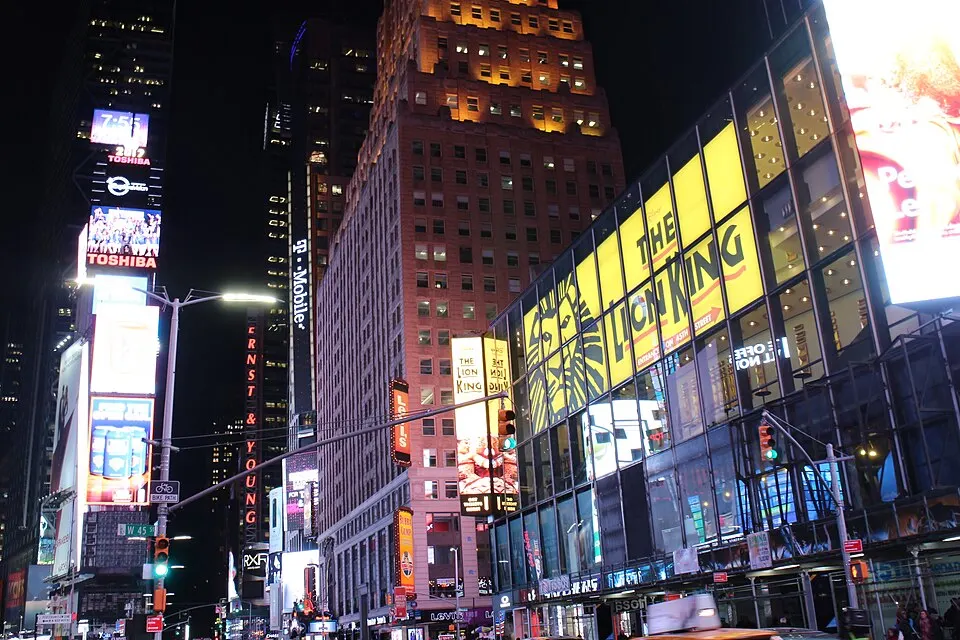
Times Square is where even an advertisement for toothpaste looks ready for its Broadway opening. Screens climb the buildings, people arrive from every direction, and the light seems unconcerned with whether the sun has gone down. On a first visit to New York, give it a little of your time. You do not have to give it the whole evening—or your credit card.
At a glance: Times Square is a free public-street and plaza visit around Broadway and Seventh Avenue in Midtown Manhattan. For a first walk, focus on 42nd–47th Streets. Allow 30–45 minutes for a look, or about an hour with photographs. Broadway shows and nearby paid attractions are separate outings.

Open Times Square in Google Maps · Official visitor information
The visits I had not planned
The first two times I found myself in Times Square, I was on my way somewhere else—to another destination or to the subway. It still managed to hold me up. Walking in a straight line becomes surprisingly difficult when your eyes are trying to watch ten screens at once.
In the original 2014 article, I wrote about going to Chicago with my girlfriend. We paid $63 each and sat so far to the side that parts of the action were difficult to see. Even so, the music, performers and scenery drew me in, and I was not a devoted theatergoer.
That is an old memory and an old price. The useful part has not expired: before celebrating a cheap theater ticket, find out what you can actually see from the seat.
An hour is enough to meet the place
A 45-minute introduction: start at Broadway and West 42nd Street, follow the pedestrian plazas north and finish at Duffy Square near West 47th Street. The walking route is free; theater tickets, shops and meals are separate. The red steps are an optional detour, not a required part of the route.
Begin around 42nd Street and look north from a pedestrian area. Let the scale of it register before reaching for your phone. The screens are the obvious attraction, but the moving crowd gives them perspective. This is a place to notice people as well as buildings.
Walk north through the pedestrian spaces toward Duffy Square. Pause at the edges of the flow rather than stopping abruptly in the middle. If you are with a group, agree on a specific meeting point first: “under the big screen” is less helpful here than it sounds.
The red steps make a natural place to look back over the scene when they are open. There is no need to queue for theater tickets just to enjoy the surrounding square. If the steps are closed or crowded, the ground-level plazas still offer plenty to look at.
Finish by turning into a theater-district side street. The marquees bring the scale down again: a title, a doorway, a performance about to begin. That small detour helps Times Square feel like a neighborhood with something happening inside its buildings, rather than an enormous screen saver.
| Your time | A sensible plan |
|---|---|
| 30 minutes | A plaza walk, a few photographs and a look toward the red steps. |
| About an hour | Continue toward Duffy Square, explore a theater side street and take a short break. |
| An evening | Book the show or meal first, then fit the walk around it. Theater running time is additional. |
After dark, in daylight, or with children?
For the glowing postcard version, choose the blue hour or after dark. Daylight gives you a different visit: the architecture becomes easier to notice, and the screens compete with the sky. A morning stop can be a gentler introduction, though no time guarantees empty pavements.
With children, make the outing shorter and decide in advance whether a store is part of the plan. Otherwise, a ten-minute walk can become an extended negotiation beside every doorway. A shared spotting game works well: find a theater sign, a yellow taxi and three different languages, staying together throughout.
Noise, crowds and animated screens can be tiring. If someone in your group is sensitive to them, plan an easy exit and keep the visit brief. The plazas are a more practical choice than the red steps with a stroller or when stairs are uncomfortable.
Broadway: choose the seat as carefully as the show
For a particular production on a particular night, begin with its official booking site. For a flexible evening, TKTS by TDF offers last-minute discounts of up to 50%, subject to the available shows and seats. Its Times Square booth is beneath the red steps at Duffy Square.
TDF lists an $8 service charge per ticket. Compare the final amount and the view, not just the discount percentage. A more expensive seat at half price can still cost more than a cheaper seat bought normally. Use the live TKTS information for inventory and opening times rather than relying on an old photograph of the board.
For a family musical, our Aladdin guide explains the story, age guidance and running time. Browse the Broadway section before deciding how much of your evening belongs outside and how much belongs in a theater.
For the story behind the productions, the Museum of Broadway on West 45th Street adds theater history and backstage craft to the neighborhood. Give it at least 90 minutes of its own; it is a paid museum visit, separate from a performance ticket.
Three minutes when the screens become a gallery
Midnight Moment runs from 11:57 p.m. to midnight on participating electronic billboards. The artwork changes monthly. In October 2026, the official program lists Dustin Grella’s Sunday Morning.
It is an appealing free finish if you are already nearby late. It is not a reason to keep exhausted children awake for hours. Nor is it a show playing continuously throughout the evening: those three minutes are the appointment.
The official program page includes the current work and earlier projects, useful for a preview before you decide to stay. New Year’s Eve is a separate event with its own arrangements; do not use an ordinary-night walking plan for December 31.
Photographs that show more than bright rectangles
From the red steps: look south for depth, people and overlapping screens. Use only the area open to visitors and leave the route clear for others.
From the plazas around 44th–45th Streets: a vertical frame emphasizes the height of the signs. Include a person low in the frame to give the scene scale.
Beside your theater: a marquee photograph tells the story of your actual evening. Take it before entry time gets tight, or after the performance if the group has energy.
After rain: reflections can make the same scene feel entirely different. Look from a pavement or pedestrian space; a photograph is no reason to step into traffic.
On a phone, tap a bright sign and lower the exposure a little if its lettering turns white. For people, wait until they are still; a long night-mode exposure can blur a face even when the background looks impressive. One photograph everyone likes beats twenty minutes of “just one more.”
A few things worth knowing before the walk
Costumed characters may invite you to pose. The Times Square Alliance’s visitor FAQ says tipping is not required, but a tip is expected after a photograph. Decide whether you want the interaction before posing. A polite refusal is enough if you do not.
Plan restroom and food breaks around places you are actually visiting; do not assume every hotel lobby provides public facilities. Buy tickets through the production or a recognized seller, and read what is included before accepting a street-side offer. Most importantly, step aside to consult your map. The pavement is also somebody’s route home.
Connect it to a day that has some contrast
Bryant Park and the public library offer a very different Midtown mood to the east. Farther along 42nd Street, Grand Central Terminal gives you another grand public space without an admission ticket. Choose a manageable combination instead of collecting every nearby landmark in one afternoon.
For a museum visit, MoMA is a separate outing farther north. For food, start with our kosher restaurant guides; confirm the specific branch’s current supervision and leave time to reach your theater. A familiar cuisine or a Hebrew sign is not itself a kosher certificate.
For a Shabbat-observant itinerary, schedule shopping, paid attractions and theater on a weekday. Keep Friday afternoon clear enough for your return journey and preparations. A Saturday-night performance needs enough time after Shabbat ends for travel and entry.
Frequently asked questions
Do I need a ticket for Times Square?
No. Walking through the public streets and plazas is free. Shows, observation attractions and other businesses charge separately.
How long should I spend there?
Allow about 30–45 minutes for a first look or around an hour with photographs and a short theater-district walk. Add a show’s running time separately.
When is Midnight Moment?
The official art program runs from 11:57 p.m. to midnight on participating screens. Consult the current program for the work showing during your visit.
Is Times Square suitable for children?
It can be, with a short visit, a clear meeting point and planned breaks. Crowds, noise and screens may be overwhelming for some children.
The personal recollection comes from Zvi’s original 2014 guide. Current practical sources are Times Square Alliance and TDF, linked above and checked October 11, 2026. Walking durations and photography suggestions are editorial recommendations.