MANHATTAN · ARCHITECTURE · A SMALL DETOUR
By Zvi Zidon and the CenterNYC editorial team · Sources checked October 13, 2026
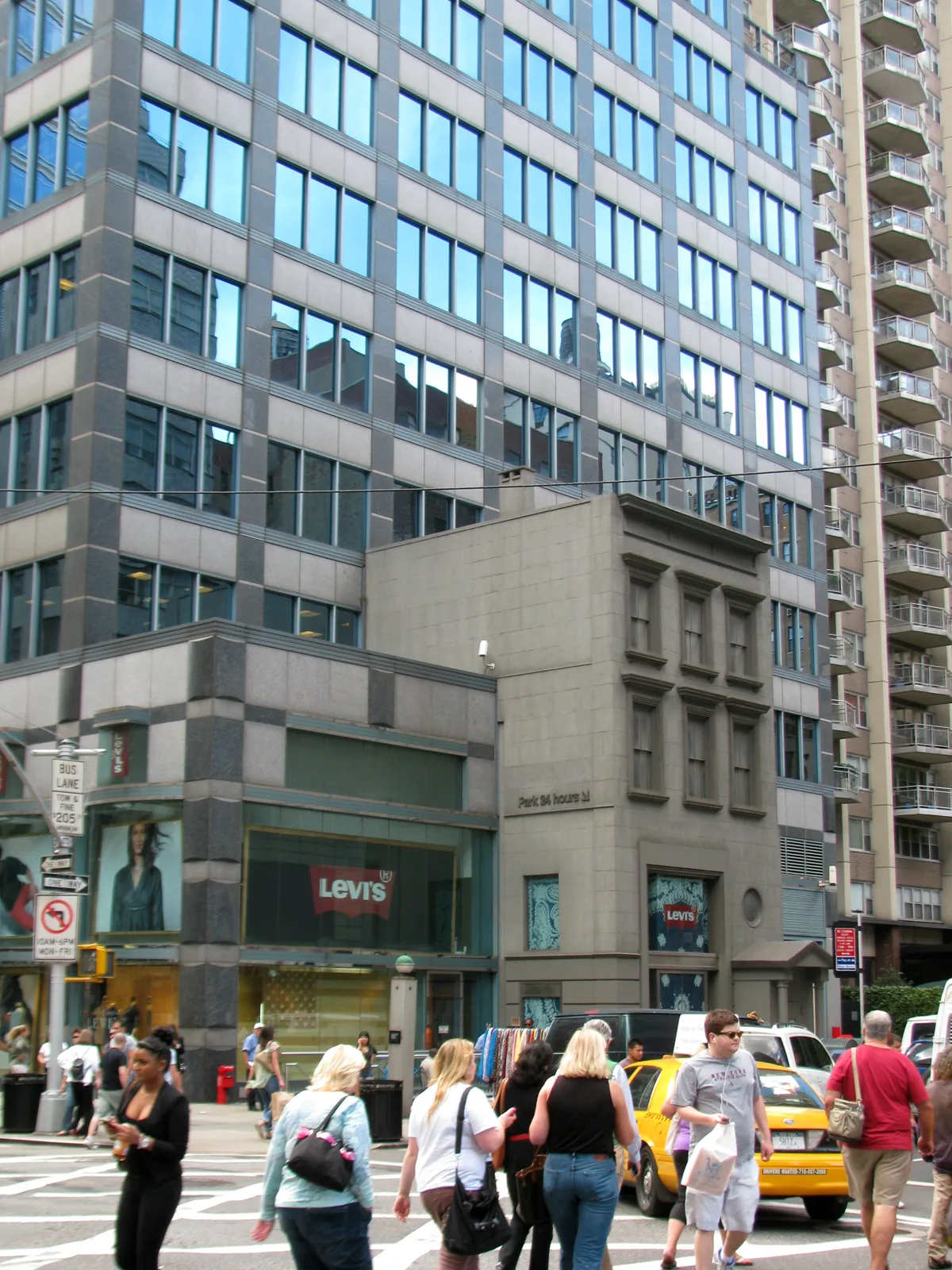
New York usually rewards you for looking up. On East 60th Street, try looking at the little building instead. Beside a tall Lexington Avenue tower sits the remnant of a house that seems to have missed the demolition memo. It did not. One tenant simply did not want to leave.
At a glance: Jean Herman’s holdout house is at 134 East 60th Street, just east of Lexington Avenue. This is a free, exterior-only architecture stop. Allow about 10–15 minutes for the story and a photograph, ideally as part of a walk already taking you through the neighborhood.
.jpg)
A tenant who changed the outline of a tower
Jean Herman rented an apartment here. During the redevelopment of the block in the 1980s, she refused to move, and the new tower went up while she remained in her home. She was a tenant protecting a place to live, rather than a landowner holding out for a more spectacular sale.
The historical account published by Ephemeral New York, drawing on contemporary newspaper reporting, describes a rent-stabilized apartment and relocation offers that did not persuade her. It also notes that Herman disputed some of the dramatic buyout figures reported about the case. She died in 1992. The enduring story is her refusal to leave, not a dollar amount that grows with every retelling.
This is more than a stray internet anecdote. Columbia University’s Avery Library inventory of the Alpern and Durst holdouts research collection lists a packet of clippings about Jean Herman at this exact address. The archive is useful evidence of the case; it is not a visitor attraction at the house.
What makes it worth a pause
The pleasure is in the mismatch. Manhattan can look inevitable from a distance: towers fill blocks, streets form a grid, and everything seems to have been planned in advance. Here, the smaller structure interrupts that neat explanation. A human decision became something you can see from the sidewalk.
Do not expect a perfectly preserved period home. The facade has changed, and the surviving building is interesting because of its relationship with the tower. Look at the point where the two scales meet. A photograph of the little house alone tells only half the story.
For children, turn it into a question before explaining: why would somebody build a tower around this? Give them a moment to invent an answer. It is a small street puzzle, which is often a better way to enjoy architecture together than another long speech about dates.
The visit in practical terms
| Detail | Plan around this |
|---|---|
| Address | 134 East 60th Street, near Lexington Avenue, Manhattan. |
| What you visit | The exterior from the public sidewalk. No interior tour is offered in this guide. |
| Time | About 10–15 minutes; an editorial allowance, not an attraction’s official duration. |
| Cost | No ticket for viewing from the street. Travel, shopping and meals are separate. |
| Best conditions | Daylight and dry weather. This is an outdoor stop with no indoor fallback. |
| Who will enjoy it | People interested in architecture, city stories and unusual photo stops. |
Open 134 East 60th Street in Google Maps. Use the street address rather than relying on a shop sign. Stay in public space and keep entrances and pedestrian traffic clear.
A small addition to a better day
We would add this stop to a day nearby, rather than cross the city just to see it. The Bloomingdale’s flagship lists its address as 1000 Third Avenue, in the adjacent 59th–60th Street shopping block. If shopping already features in your plans, the house gives the outing a short change of subject.
For a greener continuation, head west toward the southern end of Central Park. Pick a manageable park walk rather than treating the whole park as the next stop. An hour around the neighborhood is a reasonable starting allowance before adding substantial shopping, a meal or a longer park visit.
Food deserves its own choice: browse our kosher restaurant guides for a specific branch, then check its current certification and opening hours. A nearby cafe is not automatically a kosher option. For a Shabbat-observant sightseeing day involving travel or shopping, choose Sunday–Thursday outside Jewish holidays and leave Friday afternoon clear.
Put the difference in the frame
Go wide first. Include the low building and enough of the tower to show their relationship. Use a safe position on the sidewalk; the best angle is not worth stepping into traffic.
Then look for the join. A closer view of the meeting between the two structures gives you a second image with a different purpose. Keep the phone level when possible, rather than tilting so far upward that the street seems to lean over.
Let the city supply the scale. A passing taxi or pedestrian can make the size contrast clearer. Leave people room to pass and ask before making an identifiable stranger the subject of a close portrait.
Frequently asked questions
Where is Jean Herman’s holdout house?
At 134 East 60th Street, just east of Lexington Avenue in Manhattan, beside the tower at 750 Lexington Avenue.
Can you go inside?
Plan an exterior stop only. This guide does not list an interior visitor entrance or a bookable house tour.
Is it worth a special trip?
Our recommendation is to include it in a nearby walk or shopping day. The story is memorable, but the stop itself is brief.
For more city details worth noticing, browse our landmarks and history guides.
This is researched guidance, not a claim of a personal visit inside the house. Historical sources and the photo license are linked above. Walking time and photography suggestions are editorial recommendations.