UPPER MANHATTAN · ART, MUSIC AND NEIGHBORHOOD HISTORY
CenterNYC editorial guide · Practical information checked October 12, 2026
Harlem is easy to reduce to a photograph of the Apollo sign. Give it a few hours, and the photograph becomes the beginning of a much better story: artists making new work, an archive preserving voices that might otherwise disappear, and residential streets whose handsome façades carry a complicated history of who was allowed to live behind them.
At a glance: build a Harlem visit around the Studio Museum and a walk along 125th Street, or choose a longer route north toward the Schomburg Center and Strivers’ Row. Allow about two hours for a short outing or four to five hours with an indoor visit and breaks. These are our planning estimates. The historic Apollo auditorium is currently closed for renovation.

Choose the day before you choose every stop
Thursday is the strongest all-round option for this particular route: the Studio Museum, Schomburg Center, National Jazz Museum and Hamilton Grange list Thursday opening. That does not mean you should enter all four. Pick one substantial visit, one smaller stop, and leave the rest for the streets.
Sunday suits an art-focused outing: Studio Sundays offers free admission to the Studio Museum. The Schomburg Center and National Jazz Museum do not list Sunday opening, so replace those interiors with architecture and outdoor stops.
For Shabbat-observant visitors, plan the ticketed and indoor itinerary on a suitable weekday or Sunday, outside Jewish holidays. Friday evening opening hours are not a recommendation to visit after sunset or squeeze a long route into Shabbat preparations.
The shorter version: art and 125th Street
Begin at the Studio Museum, then walk along 125th Street to the Apollo exterior. This keeps the day concentrated rather than stretching north simply because another landmark exists. Give the museum roughly 60–90 minutes if the current exhibitions interest you, with additional time for the street, photographs and a break.
The longer version: one museum, then the neighborhood
Start around 125th Street, continue toward the National Jazz Museum on 129th if it is open, then the Schomburg at 135th and Strivers’ Row at 138th–139th. Hamilton Grange on 141st is an optional extension tied to a tour slot. It is better to omit it than turn the afternoon into a race for the final tour.
This is a suggested sequence, not a timed guided tour. Check the walking legs in your map app, especially with a stroller, limited walking tolerance or winter daylight. A building seen from the sidewalk and a full museum visit require very different amounts of time.
The Studio Museum: give the art the first word
The Studio Museum focuses on artists of African descent and work shaped by Black culture. Choose a current exhibition that interests you and make it the day’s anchor. A neighborhood gains depth when you spend time with what people are creating now, as well as the names already written into its history.
| Address | 144 West 125th Street. |
|---|---|
| Admission | Pay what you can. Suggested amounts: adults $16; seniors 65+, students and visitors with disabilities $9. Ages 16 and under and care partners enter free. |
| Hours | Wednesday, Thursday, Saturday and Sunday 11 a.m.–6 p.m.; Friday 11 a.m.–9 p.m.; closed Monday and Tuesday. |
| Free Sunday | Studio Sundays offers free admission and family programming. |
Book through the official visitor page. The suggested adult contribution is not a compulsory fixed ticket price. Read the current exhibition descriptions before deciding how much time to spend here.


Before you go: watch the museum’s own video, Unpacking the Studio Museum: Our Museum. Published in November 2025, it follows staff into the new building and behind the scenes of installing art. It is an introduction to the museum, not a preview of every exhibition on your travel dates.
Apollo: an iconic address, with an important distinction
The sign at 253 West 125th Street is a worthwhile exterior stop. But a famous façade and an available auditorium are not the same thing: the Apollo’s current visitor page says the historic theater is closed for renovation, with reopening expected in late 2026. That expectation is not a confirmed date for your trip.
The Apollo Stages at the Victoria, at 233 West 125th Street, is a different venue. When choosing an event, read the address on the actual ticket. Do not turn up at the historic entrance because the performance carries the Apollo name. Prices and admission ages belong to the specific show.
Take an exterior photograph from a safe spot on the public sidewalk, then keep moving. You can appreciate the address without pretending an interior tour is currently part of your afternoon.
Schomburg and Strivers’ Row: two ways to read Harlem
The Schomburg Center gives the neighborhood a different pace. Instead of a stage, there are collections, exhibitions and research devoted to Black history and culture. It is a place for looking closely and listening to what documents and images can tell you, not simply another building to photograph.
The NYPL location page lists 515 Malcolm X Boulevard at 135th Street, regular hours Monday–Saturday 10 a.m.–6 p.m., and Sunday closure. Research divisions can have different hours and access procedures; use the specific exhibition or event listing for a casual visitor plan. NYPL identifies the location as fully accessible.
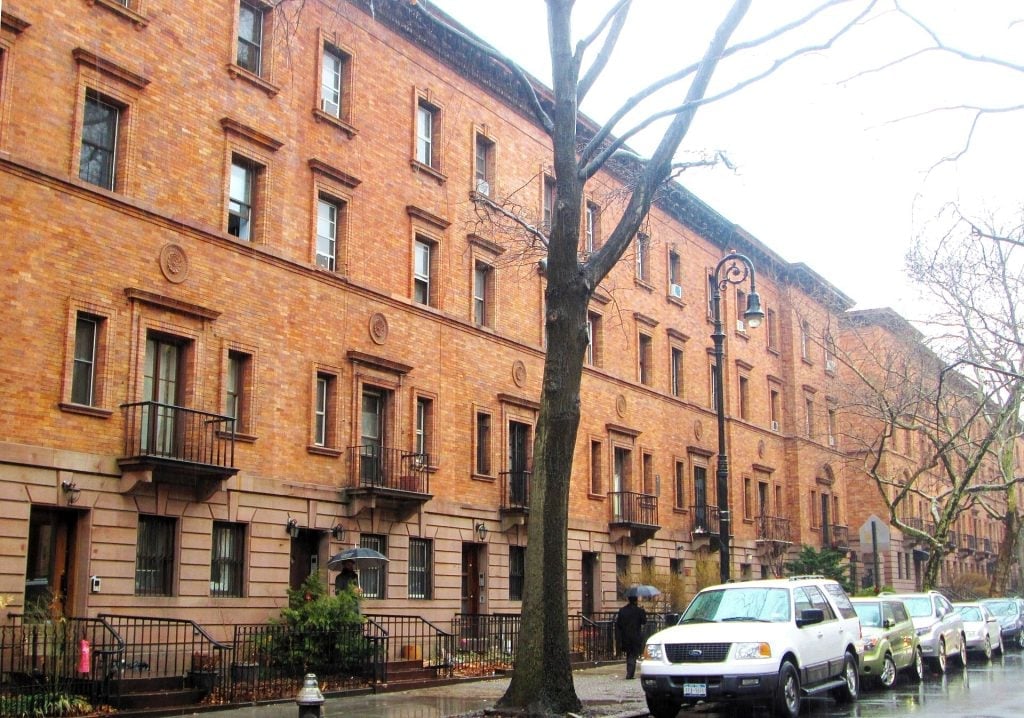
Farther north, Strivers’ Row rewards a slower look at doors, masonry and the rhythm of the houses. The name is more than attractive real estate branding. The neighborhood association’s history of the development describes houses originally intended for white upper-middle-class buyers, and the refusal to sell to Black residents until 1919–20. The later arrival of Black professionals and community leaders is essential to understanding the district.
Shared rear courtyards and gated alleys were part of the design. Some gates retain the words “Walk Your Horses,” a small detail that suddenly brings an older street to life. Observe from public sidewalks: the houses and enclosed spaces remain private homes, not an open-air museum you can enter.
Optional extension: Hamilton Grange
At 414 West 141st Street, Hamilton Grange offers a smaller-scale historical encounter. The visitor center is open Wednesday–Sunday, 10 a.m.–4 p.m.; the historic rooms are accessible only on a tour. Tours are free, first come first served, with a maximum of 14 people.
The National Park Service schedule lists Wednesday–Friday tours at 11:30 a.m., 1:30 p.m. and 3:30 p.m., with additional weekend slots. Choose a suitable time before extending your walk. A free tour still has a capacity limit.
The National Jazz Museum: a small stop for a big subject
If music is the reason you came to Harlem, make room for the National Jazz Museum rather than relying on the chance of hearing something as you walk past. The visit can be a compact part of the day, with a separate event becoming the main reason for an evening trip.
The museum’s visitor page lists 58 West 129th Street, Thursday–Saturday noon–5 p.m., a suggested donation of $10, and at least 30 minutes for a visit. A suggested donation is not a fixed compulsory admission fee. Check its current program for performances and talks; ordinary gallery hours do not promise a live concert.
Photographs, a park break and a different Harlem story
Three subjects are enough for a satisfying photo walk: the Apollo sign, the Studio Museum exterior, and the repeated façades of Strivers’ Row. Photograph the buildings from public space, give residents room, and ask before making an identifiable stranger the subject of a portrait. Good travel photography does not require blocking a doorstep.
For a shorter outdoor break near the lower part of the route, consider Marcus Garvey Park. Use the park’s current notices for facilities; a park stop is not a guarantee of access to its historic watchtower.
Basketball fans have another Harlem destination in Rucker Park. It is farther north and makes a separate extension, not a stop beside the Apollo. The court’s reputation does not mean a scheduled game will be taking place when you arrive.
Getting here, food and the real cost of the afternoon
Use the exact destination in your map app: several stations are called 125th Street, but they are on different subway lines and at different parts of the neighborhood. For a short visit, choose your first museum before your train. For a longer walk, plan the return from your final stop instead of doubling back automatically.
Studio Museum map · Apollo exterior map · Schomburg map · Strivers’ Row map · Hamilton Grange map
A public-sidewalk walk has no attraction admission charge. Museum contributions, performances, transport and food are separate. Paying the suggested $16 at Studio Museum and $10 at the Jazz Museum would mean $26 per adult before those other costs; that is an example contribution budget, not a neighborhood pass.
Kosher meals: plan a verified meal stop separately using our kosher restaurant guides. A venue’s restaurant partnerships do not establish kosher certification. Allow for the journey and check the current certificate for the branch you choose.
If you want a different neighborhood on another day, our Astoria guide pairs art and film with the Queens waterfront. Browse museum guides for an indoor alternative when the forecast makes a long walk unappealing.
Questions before a Harlem visit
Can I go inside the historic Apollo Theater now?
Its visitor page currently lists renovation closure and an expected late-2026 reopening. Check the exact venue of any booked event; the Victoria stages are a separate location.
Is Studio Museum admission always $16?
No. It operates pay-what-you-can admission with $16 as the suggested adult amount. Studio Sundays offers free admission.
Which day best fits the museums in this route?
Thursday overlaps the published opening days of Studio Museum, Schomburg, the Jazz Museum and Hamilton Grange. Choose a manageable selection rather than trying to enter all of them.
Can I visit the houses on Strivers’ Row?
This guide recommends viewing their architecture from public sidewalks. Private homes and gated areas are not open visitor attractions.
Researched editorial guide, not an account of a personal visit. Official visitor sources checked October 12, 2026 and linked above. Route lengths and suggested combinations are CenterNYC recommendations.