QUEENS · NEIGHBORHOODS · MUSEUMS · WATERFRONT WALKS
By Zvi Zidon and the CenterNYC editorial team · Practical sources checked October 13, 2026
Manhattan knows how to pose. Queens gives you somewhere to stand and look at it. Along the Long Island City waterfront, the skyline becomes a view instead of a collection of buildings you are trying to reach. A different day might take you inside the world of movies, beneath the Unisphere or into the home of a jazz legend. The mistake is trying to make all those days happen on the same afternoon.
At a glance: Choose one part of Queens for your outing: Long Island City for skyline views, Astoria for film and neighborhood exploring, or Flushing Meadows–Corona for museums, park time and family attractions. Allow two to four hours for one focused area, plus your journey. These are suggested visit lengths, not a borough-wide opening schedule.

Choose the day you actually want
| Area | Choose it for | Suggested allowance |
|---|---|---|
| Long Island City | Waterfront, photography and an unhurried skyline walk | 2–3 hours |
| Astoria | Museum of the Moving Image and a neighborhood outing | 3–4 hours |
| Flushing Meadows–Corona | Unisphere, Queens Museum, or a family attraction | Half a day with one main paid stop |
| Corona’s Louis Armstrong Museum | Jazz history and a reserved house tour | About 2 hours at the museum, plus travel |
Pick the row that makes someone in your group say, “That sounds good.” Then leave the others for another visit. Queens rewards curiosity, but curiosity does not need four subway journeys to prove itself. With children, a museum and an outdoor break can be a complete day. For a couple, a waterfront walk might be enough.
Long Island City: give Manhattan the afternoon off
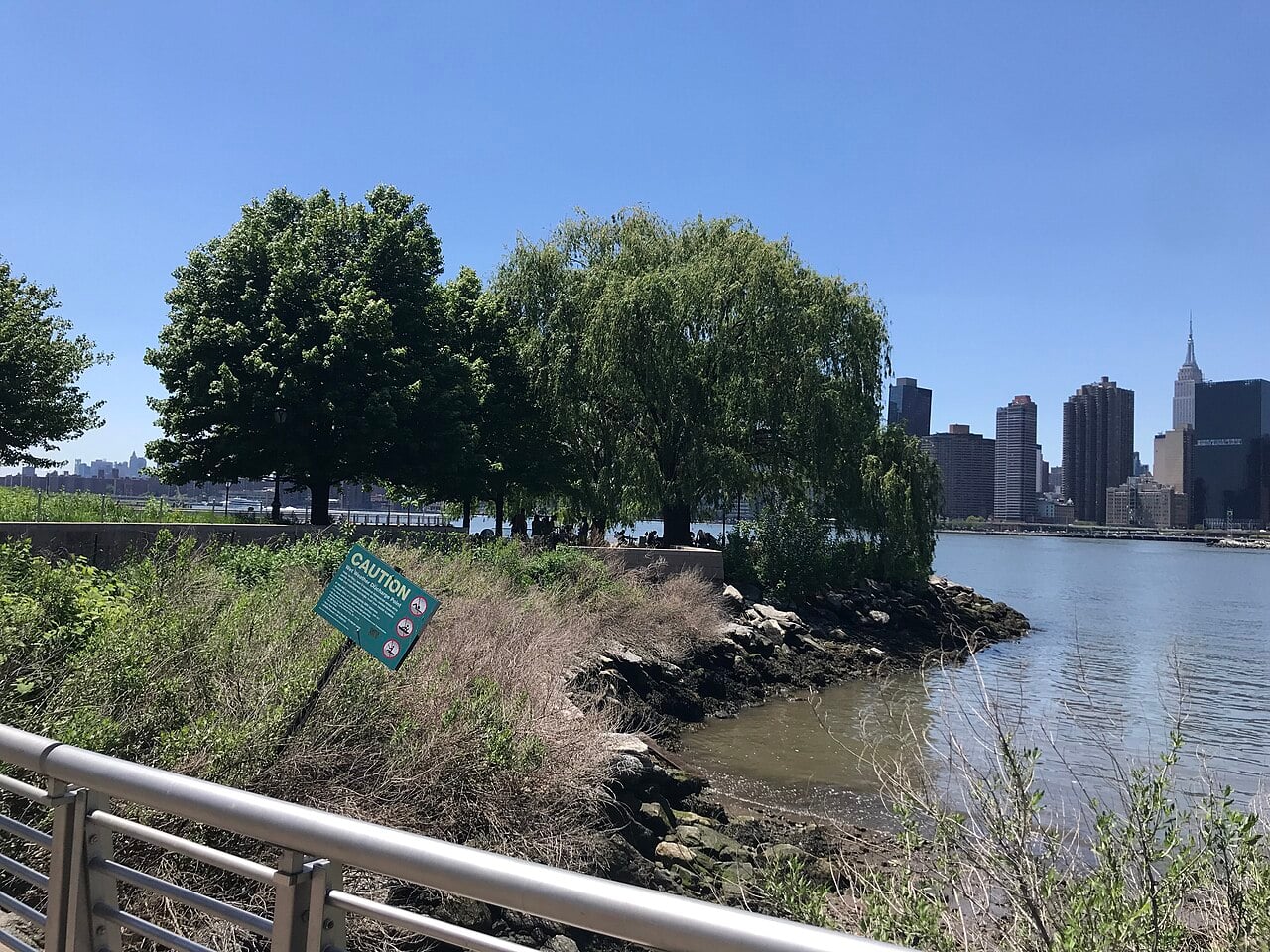
At Gantry Plaza, the old industrial structures give the view a foreground. Frame one of them against the towers across the East River, then put the camera away for a while. The pleasure is being able to follow the water without a reservation determining your next move.
The official state-park page describes four piers, restored gantries, gardens and recreation areas. Its current hours section says dawn to dusk, while older wording elsewhere on the same page mentions later hours. Plan a daylight visit and follow posted closing notices rather than relying on a guaranteed late-night walk. Wind and rain can change this outing more than the temperature on your phone suggests.
Open Gantry Plaza in Google Maps. For photographs, leave room around the skyline and include the river. A little context makes the picture feel like a place you visited, rather than a row of buildings cut from a postcard.

Astoria: when the screen becomes the subject
Museum of the Moving Image makes a good main stop for someone more interested in how pictures move than in another traditional gallery. Its subject runs through film, television and the technology behind them. Start with the museum, then decide whether your group wants more neighborhood time or simply a comfortable journey home. Our Astoria guide explores the wider choices.
At 36-01 35 Avenue, regular gallery admission is $20 for adults, $12 for seniors 65+ and adult students, and $10 for ages 3–17; under-threes enter free. Online purchases add $1.50 per ticket. Thursday hours are 2–6 p.m., with free museum admission during that window; Friday is 2–8 p.m., and Saturday–Sunday 11 a.m.–6 p.m. Screenings have their own ticket arrangements. For a Shabbat-observant outing, Thursday or Sunday offers a more workable choice than Friday afternoon.
Two adults and two children ages 3–17 therefore have a $60 gallery-admission budget, or $66 when buying four tickets online, before transport and food. The Thursday free window changes that calculation substantially. See our full Moving Image guide before choosing a screening or planning around a particular exhibition.
Flushing Meadows: the whole city inside, the world outside
The Unisphere does not need much explanation to win over a child. It is an enormous globe in a park: sometimes the simple description is the best one. Nearby, Queens Museum offers a different change of scale through its Panorama of the City of New York. Give the museum and the globe room to be the outing, rather than treating both as a warm-up for three more attractions.


Queens Museum admission is pay what you wish: $8 for adults and $6 for seniors or students are suggested contributions. Children 12 and under enter free. Regular hours are Wednesday–Friday noon–5 p.m. and Saturday–Sunday 11 a.m.–5 p.m., with last gallery entry at 4:30. Reserve a timed ticket if possible; groups must arrange visits in advance. The museum recommends allowing around 15 minutes to walk from the relevant 7-train stations.
Choose a different main attraction when it better suits the family: Queens Zoo for animals, or New York Hall of Science for hands-on science. Each has its own admission and schedule. Read the Queens Museum guide for the museum visit; a park map is not a promise that every nearby attraction will fit comfortably into the same day.
Corona: meet the person behind the trumpet
A jazz landmark does not have to look like a stage. At the Louis Armstrong House Museum, the attraction is the contrast between a worldwide musical life and the rooms someone came home to. Choose this stop because the story interests you, not because you happen to be collecting Queens addresses.
Begin at the Louis Armstrong Center, 34-56 107th Street. The official visitor page lists Thursday–Saturday, 11 a.m.–4 p.m.; for our Shabbat-observant plan, choose Thursday. Adult admission is $20 for the house tour and exhibitions, or $10 for exhibitions only. Book the house in advance. Tours last about 45 minutes, and the museum suggests roughly two hours overall. The historic house has two sets of steep stairs; the Center is wheelchair accessible, and a virtual house tour is offered for visitors unable to take the physical tour.
Listen before you go: the museum’s free digital guide, linked from its visitor page, offers stories and images that give the visit more context. A museum visit and an evening concert are different bookings; use its events calendar if live music is your priority.
Travel, kosher food and a day that holds together
Queens is part of New York City, but that does not make every Queens destination near every other one. Use the actual entrance in your route planner, include the walk from the station and look at the return trip before leaving. The museum sources above link current travel guidance. A transfer that looks harmless at breakfast can feel different with a tired child at the end of the day.
Rockaway is better treated as a separate coastal outing than as an extra stop after Astoria and Flushing. Likewise, the Ohel in Cambria Heights needs its own journey and visiting plan. A meaningful visit deserves more than the leftover time between two unrelated reservations.
Arrange kosher food around the area you choose. Restaurants in Rego Park, Kew Gardens Hills or Fresh Meadows may require another journey from the waterfront or museum. Use the current Vaad Harabonim of Queens directory to identify supervised businesses, then confirm the certificate for the exact branch. A neighborhood’s Jewish character does not establish the supervision of every café in it. Bringing a suitable meal can make an outdoor day easier, subject to the venue’s food rules.
For Shabbat-observant travelers, these transit-based museum plans belong on suitable weekdays outside Jewish holidays. Keep Friday afternoon clear. A local walk on Shabbat is a different plan with its own practical and religious considerations.
Three small choices that improve the day
- Keep the photo stop short enough to enjoy it. One good skyline photograph is worth more than making everyone wait through twenty nearly identical ones.
- Choose one indoor fallback. An Astoria museum does not automatically solve rain during a visit on the other side of Queens. Match the fallback to the same area and its opening day.
- Leave an easy finish. End near the transport you intend to use, rather than discovering that your last “nearby” stop has moved you away from it.
Frequently asked questions
Can we see all of Queens in one day?
Choose one area for a more enjoyable visit. Long Island City, Astoria and Flushing Meadows offer different outings; trying to combine every district uses too much of the day on transfers.
Which Queens plan works in rain?
Start with an open museum, such as Museum of the Moving Image or Queens Museum. Keep the outdoor portion optional and confirm the museum’s opening day before traveling.
Is Queens Museum’s $8 admission mandatory?
No. Its admission is pay what you wish; $8 is the suggested adult contribution. Children 12 and under enter free.
Is there one ticket for these Queens attractions?
This guide combines separate destinations. Each paid attraction has its own tickets and conditions; transport and meals are separate costs.
Practical details are sourced beside each destination and were checked October 13, 2026. Suggested routes and durations are editorial planning advice; this guide does not claim a personal visit to every stop.